Compare the Animal’s Overall Build
A quick glimpse rarely shows every feature, so compare the outline before deciding. In Dearborn, a rat tends to look broader through the body, with a heavier frame. A mouse generally appears finer and smaller beside familiar household objects. A visible tail can add another feature to consider alongside the body outline. Notice its size relative to a floorboard, container, or other object already in view. Do not approach for a closer look. That first estimate gives an assessment a useful starting point, even when it cannot settle the rat versus mouse question.
The tail and head can sharpen that first impression. Rats tend to have thicker tails and more substantial heads; mice look more delicate overall. Ears may appear larger in proportion to a mouse’s head, while a rat’s features look heavier. These are comparisons, not fixed rules for a glimpse across a room. In Dearborn homes, a ranch layout or split-level sightline may reveal only part of an animal. Record what was visible, including whether its tail showed, and leave uncertain details marked as uncertain.
Use Droppings as a Scale Clue
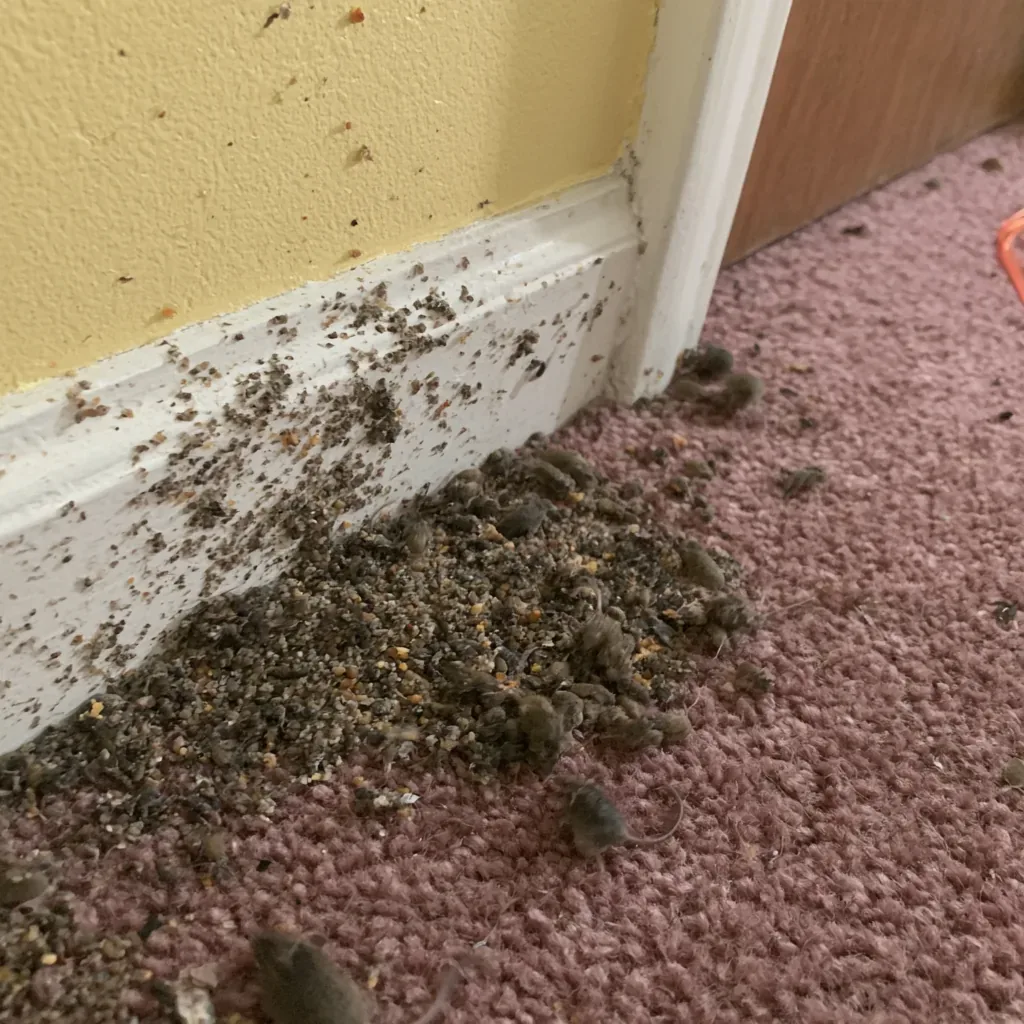
Droppings offer another scale comparison when an animal is not seen clearly. Where droppings appear can be noted as context, even when their size is unclear. A homeowner might notice them beside stored items or along a room edge. Do not touch or move them to compare. In Dearborn, the useful detail is relative size as observed from a safe distance, not a confident species label from one sample. An assessment can consider that clue alongside the animal’s build and other signs.
Where a sign appears adds context, but location alone cannot identify the animal. Note the room, nearby wall or storage, and whether similar clues appear elsewhere. A home near Community Park can have a different setting from one near Young Recreation Center, but those landmarks do not predict which rodent is indoors. In Dearborn, a written location helps an assessor connect observations without treating a single spot as proof. Keep the note factual: what was seen, where it was, and whether the animal itself appeared there.
Interpret Gnaw Marks and Sounds
Gnaw marks may show that an animal has been active, yet the marks rarely distinguish a rat from a mouse by themselves. Look from a distance for damaged packaging or visible surface marks. In Dearborn, note the object's location and the mark's approximate scale rather than guessing which animal made it. A larger damaged area could reflect several causes, so it does not confirm a rat. Paired with a clear sighting or droppings for scale, this evidence can help describe activity more accurately during an assessment.
Scratching or movement sounds can point to activity without revealing the animal's size. Record the time, room, and whether the sound seemed to repeat or shift. A sound near a wall does not establish what is behind it, and opening a surface for a better look is not needed. Dearborn's homes vary in layout, so the same sound may be easier to place in one room than another. Treat sound as a location clue, then compare it with visible evidence before drawing a conclusion.
Weigh Clues Before Identifying
To identify rodents, weigh the clues together: overall build, tail thickness, droppings scale, and where activity appears. A heavier body and thicker tail lean toward rat; a smaller, finer outline leans toward mouse. Neither label should rest on a sound or mark alone. In Dearborn, a home near Reeck Drain has no special identification rule; the observed features still matter. A brief or obstructed sighting may leave the answer open. An assessment can review the combined observations and determine whether the signs support either identification.
A brief sighting may leave only a few details to work with. Include whether the tail was visible and how the animal moved, if noticed. A distant photo may preserve details when taking one is safe, but no image is required. In Dearborn, a homeowner can share these notes with the pros we connect you with. Separate direct observations from guesses, such as “dark shape by pantry” versus “probably a rat.” That distinction helps an assessor judge what the evidence can and cannot show.
Dealing with rodent activity in your home?
Inspection cost depends on what the owner needs assessed and the visit details; $80–$175 shows the current inspection band. In Dearborn, a homeowner may notice a sharp odor, small droppings, gnawed packaging, or movement sounds before knowing whether rats or mice are involved. Teller Park, Reeck Drain, and Brand Park are local reference points, not clues to activity at any address. The pros we connect you with can explain what an inspection includes, whether service reaches the property, available timing, and any visit charge. Ask before booking; findings may guide next steps.